Why Talent Strategy Is No Longer Limited by Geography
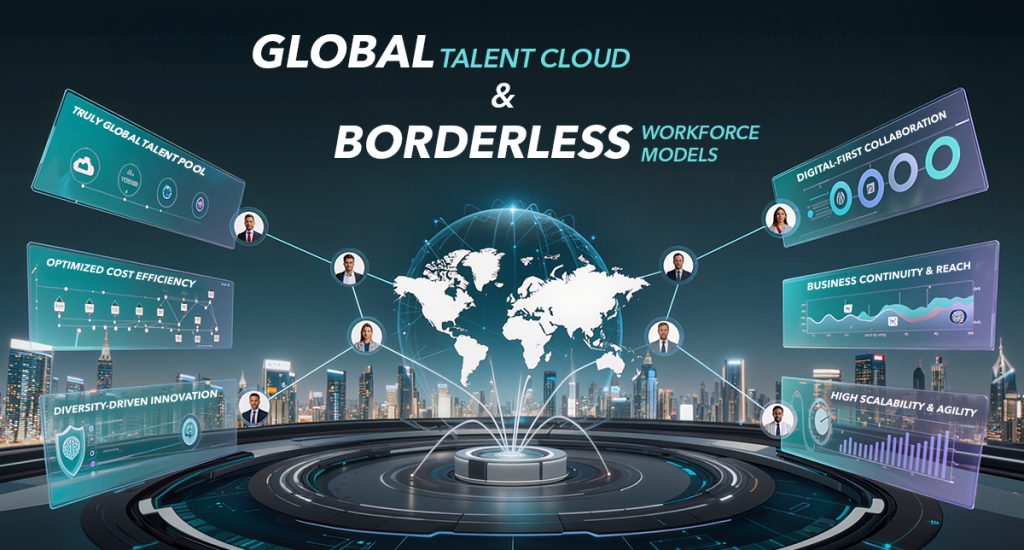
The way organizations build teams is fundamentally changing. Hiring is no longer defined by office locations or regional talent pools. Today, workforce strategy is driven by skills availability, digital infrastructure, and global connectivity. Forward-looking companies are moving toward Global Talent Cloud models — where talent can be sourced, deployed, and managed across borders in real time. This shift is transforming staffing from a hiring function into a strategic business capability focused on long-term workforce resilience and growth.
The Borderless Workforce Is Already Here
Data shows that global workforce distribution is no longer a future trend — it is already happening. Many organizations now employ borderless technology talent, and cross-border remote hiring continues to grow rapidly. A significant portion of companies are expanding internationally through remote hiring to access specialized skills. At the same time, remote and hybrid work models have become standard across industries. Digital hiring is now normalized, proving that organizations can successfully build and scale teams without geographic limitations.
Why Organizations Are Moving to Global Talent Cloud Models
Three major forces are accelerating this shift.
Skills scarcity is pushing companies to expand hiring beyond local markets. Many critical digital and engineering skills simply are not available in one geography.
Candidate expectations have changed. Remote-enabled roles attract larger and more qualified talent pools, improving hiring outcomes.
Digital job growth is expanding rapidly, increasing demand for distributed workforce models across industries.
The New Role of Workforce and Staffing Partners
The role of staffing and workforce partners is evolving quickly. Organizations now need support beyond sourcing talent. They need partners who can help design distributed workforce strategies, manage global compliance and payroll complexity, build hybrid operating models, and integrate AI-driven workforce planning.
The future competitive advantage will come from building strong global talent ecosystems — not just hiring faster.
The Real Challenge: Managing Global Workforce Complexity
While global hiring creates access to opportunity, it also introduces complexity. Companies must navigate international labor regulations, pay equity challenges, cross-cultural collaboration, cybersecurity risks, and data governance requirements. Organizations that solve these challenges effectively will lead the next phase of workforce transformation.
What the Future Looks Like
Over the next few years, Global Talent Clouds are expected to replace regional talent hubs. AI and workforce analytics will increasingly drive global workforce planning decisions. Staffing firms will continue evolving into strategic workforce partners rather than traditional recruitment vendors. The future of work will combine centralized workforce strategy with decentralized global talent execution.
Final Perspective
The future of hiring is not remote versus onsite. It is about building a workforce that is flexible, global, and skills-driven. Organizations that embrace borderless workforce strategies today will be better prepared for tomorrow’s talent economy.