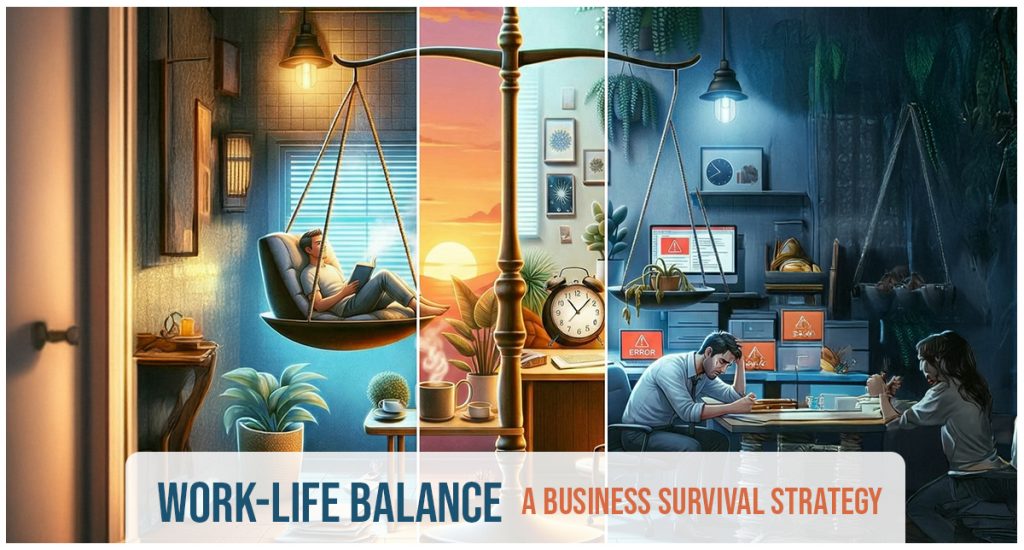
For years, organizations positioned work-life balance as an employee perk — something they offered to improve satisfaction or strengthen employer branding. But the corporate world has changed. Today, work-life balance is no longer a “nice-to-have” initiative. It directly drives productivity quality, workforce retention, innovation output, and long-term business performance. In an always-connected corporate environment powered by hybrid work models, global teams, and AI-driven productivity expectations, leaders face a new reality: performance only matters when teams can sustain it. Short bursts of productivity no longer create long-term advantage. Sustainable performance now defines competitive strength.
Across workforce transformation programs, including those led by blueStone Solutions Group, leadership teams are shifting their focus. They no longer ask only how to increase output. They now ask how to sustain high performance without exhausting the workforce that delivers it.
The New Corporate Risk: Burnout Is Now a Business Challenge
Modern professionals operate in high-speed, high-expectation environments where work frequently spills into personal time. Technology accelerates collaboration and connectivity, but it also increases cognitive load, response pressure, and always-on expectations.
Industries are already seeing the consequences. Burnout drives disengagement, lowers productivity quality, and increases attrition costs. Organizations that ignore this shift expose themselves to serious business risks. They lose critical talent, compromise output quality, increase hiring and replacement costs, and weaken innovation capacity. Simply put, exhausted teams cannot build future-ready businesses.
Why Work-Life Balance Has Become a Competitive Advantage
Forward-thinking organizations no longer treat workforce well-being as a symbolic cultural initiative. They treat it as a measurable business lever. When employees maintain strong mental and physical energy, they produce higher-quality work. When companies support flexibility and structured well-being programs, they strengthen retention. Over time, these decisions reduce absenteeism, control healthcare costs, and lower rehiring expenses.
Employer reputation also plays a critical role. In competitive talent markets, candidates evaluate how companies protect employee well-being — not just how they reward performance. Organizations that design sustainable work cultures attract stronger and more future-ready talent pipelines.
The Shift From “Working More” to “Working Smarter”
The definition of productivity continues to evolve. Leading organizations no longer measure success by hours worked or visible effort. Instead, they prioritize outcomes and value creation. Flexible work structures, mental wellness initiatives, and AI-enabled workload distribution accelerate this shift. Workforce analytics now helps leaders detect burnout signals early and rebalance workloads before productivity declines.
Technology can scale tasks, but people create value. Organizations that understand this distinction redesign work models around sustainable human performance rather than continuous operational intensity.
blueStone POV: Work-Life Balance Is Workforce Design
From a workforce strategy perspective, work-life balance no longer sits within HR alone. It shapes workforce architecture. Future-ready organizations invest in planning models that align business growth with sustainable employee performance. They adopt flexible talent structures that combine full-time, contract, and project-based professionals to manage workload peaks intelligently. They leverage workforce analytics to identify early productivity risks and prevent burnout before it impacts performance.
Leadership conversations are evolving quickly. Executives now ask whether teams can sustain performance for the next five years — not just whether they can meet today’s targets. This shift reflects a new leadership mindset focused on human sustainability, not short-term operational output.
The Future of Corporate Success: Human Sustainability
As AI and automation reshape how work gets done, uniquely human capabilities will differentiate high-performing organizations. Creativity, complex decision-making, collaboration, and emotional intelligence will define long-term success. Pressure alone cannot strengthen these capabilities. Organizations must create environments where employees think clearly, recover energy, and stay deeply engaged. Future leaders will not simply automate work. They will redesign work around sustainable human performance and treat workforce energy as a finite, high-value business asset.
Conclusion: The New Definition of High Performance
Work-life balance does not mean working less. It means enabling people to perform at their best — consistently, predictably, and sustainably. Organizations that embrace this mindset build stronger cultures, more resilient teams, and more future-ready business models. In the future of work, the most successful companies will not demand the most output. They will design work in ways that allow great performance to last.