

A Thought-Leadership View from blueStone Solutions Group explores the staffing market forecast 2026–2030.
The global staffing market is entering a decisive decade. From 2026 to 2030, staffing will shift from a transactional hiring function to a strategic driver of business resilience, innovation, and growth.
As digital transformation accelerates and skill shortages deepen, organizations must rethink how they access, deploy, and retain talent.
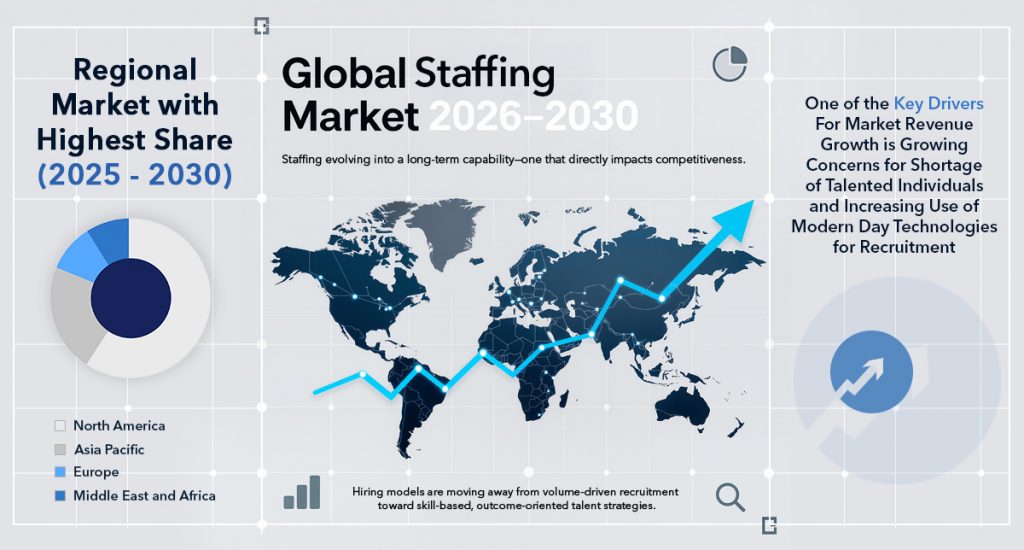
At blueStone Solutions Group, we see staffing evolving into a long-term capability—one that directly impacts competitiveness.
Market Outlook: 2026–2030
The global staffing market is expected to grow steadily through 2030, driven by:
- Persistent shortages in specialized skills.
- Rising demand for flexible and project-based talent.
- Expansion of digital, cloud, and cybersecurity initiatives.
- Increased focus on workforce agility and cost optimization.
Hiring models are moving away from volume-driven recruitment toward skill-based, outcome-oriented talent strategies.
Key Trends Reshaping the Staffing Industry
1. Skill Gaps Are Structural
Demand for niche expertise—cybersecurity, cloud, AI, data, and regulated IT—continues to outpace supply. Organizations are prioritizing proven capability over résumés and credentials, increasing reliance on specialized staffing partners.
2. Flexible Staffing Is Now Core
Contract and hybrid workforce models are no longer temporary solutions. They enable faster scaling, access to scarce skills, and reduced workforce risk—making flexibility a permanent feature of workforce planning.
3. Technology Enables, People Differentiate
While AI and automation have undoubtedly accelerated sourcing speed, in reality, hiring success still largely depends on human judgment, industry expertise, and contextual insight; therefore, the future of staffing lies in seamlessly combining technology with experience.
4. Talent Is Borderless
As remote work continues to globalize talent access, and while cross-border staffing and distributed delivery models steadily expand—particularly across IT and digital roles—as a result, compliance and governance expertise is becoming increasingly critical.
What This Means for Employers
To stay competitive through 2030, organizations must:
- Treat staffing as a strategic partnership.
- Shift from keyword hiring to skill-based evaluation.
- Balance permanent and flexible workforce models.
- Align talent decisions with long-term business goals.
Staffing choices will increasingly influence innovation, security, and operational continuity.
The blueStone Perspective
At blueStone Solutions Group, we go beyond placement. Our consultative, specialization-led approach helps organizations build future-ready workforces with precision and confidence.
As the global staffing market evolves, our focus remains clear: connecting the right talent to the right opportunity—strategically and sustainably.